Staples Mobile App
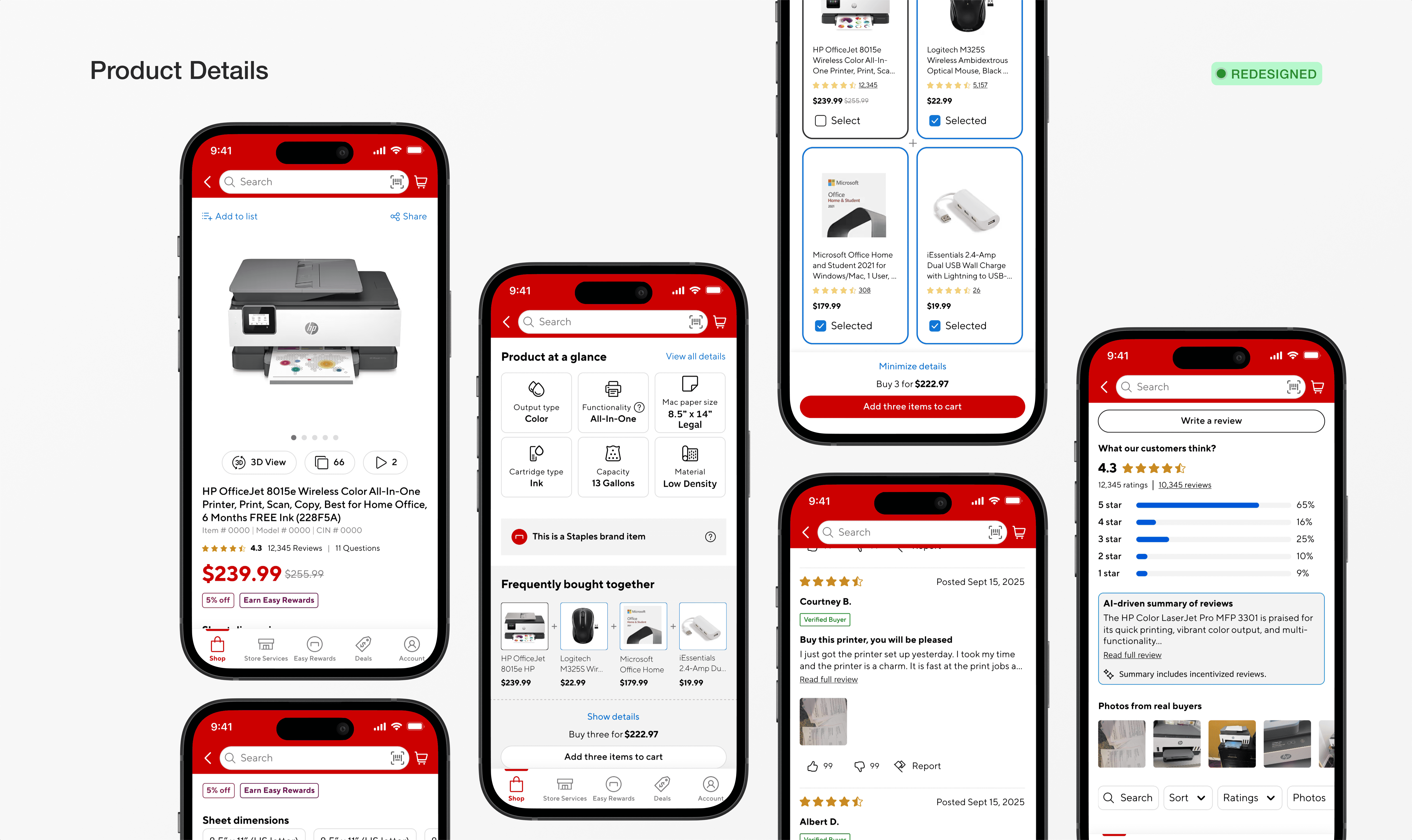
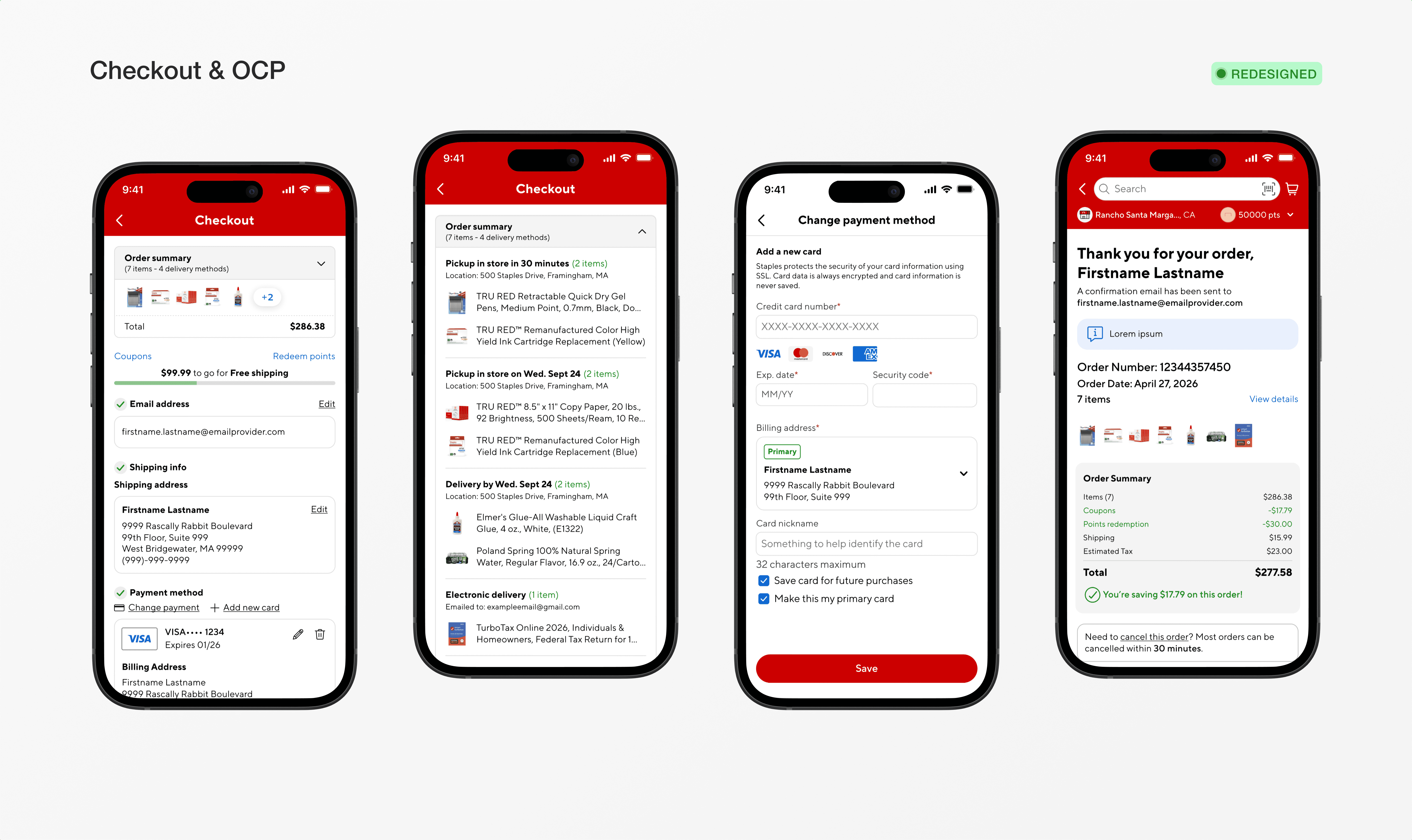
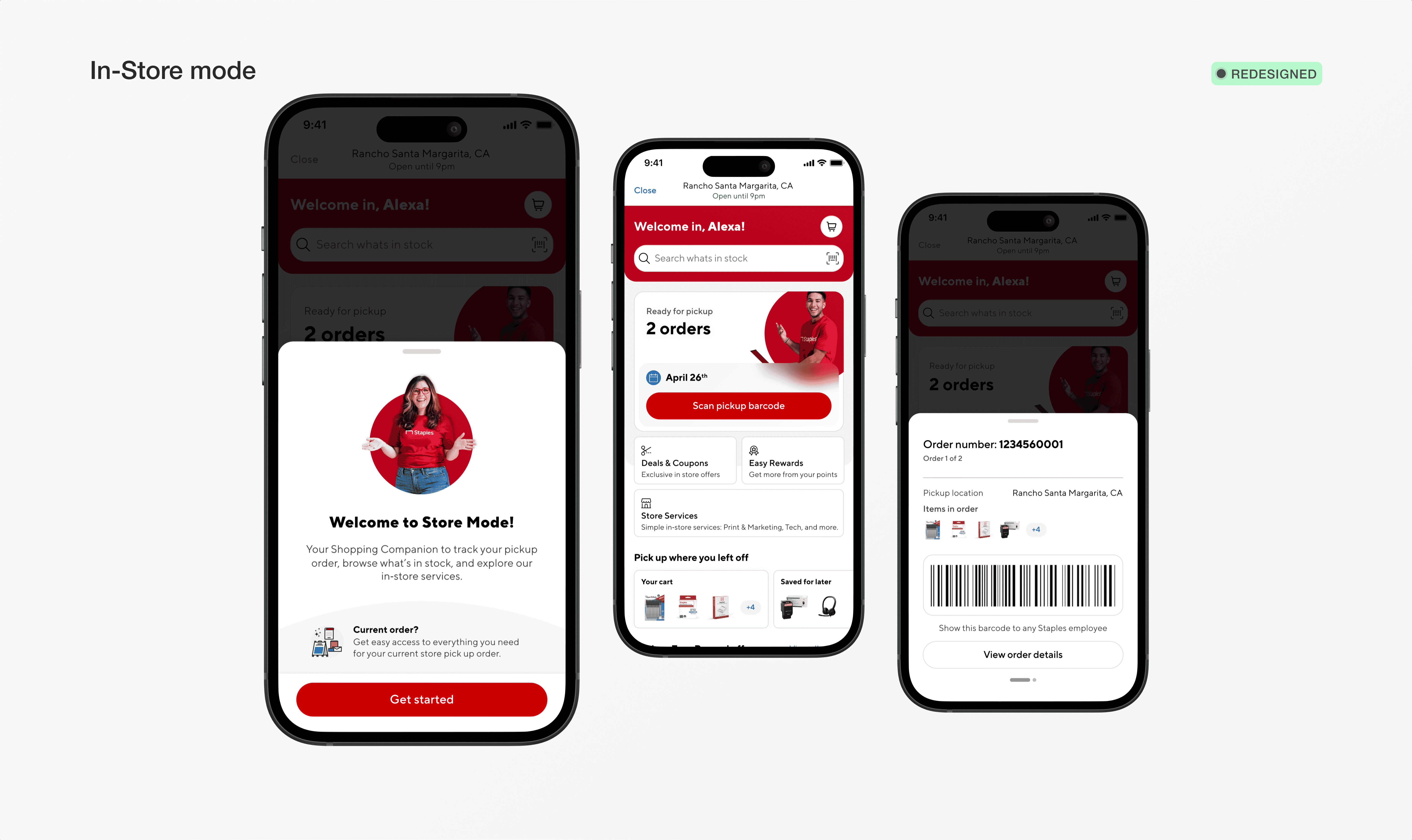
Led the end-to-end redesign of the Staples mobile experience by modernizing the design system, restructuring customer journeys, and aligning business objectives with a mobile experience that better reflects evolving customer expectations.
Type
Product
, Brand
Date
Oct 2025 - April 2026
Outcome
15% growth in traffic
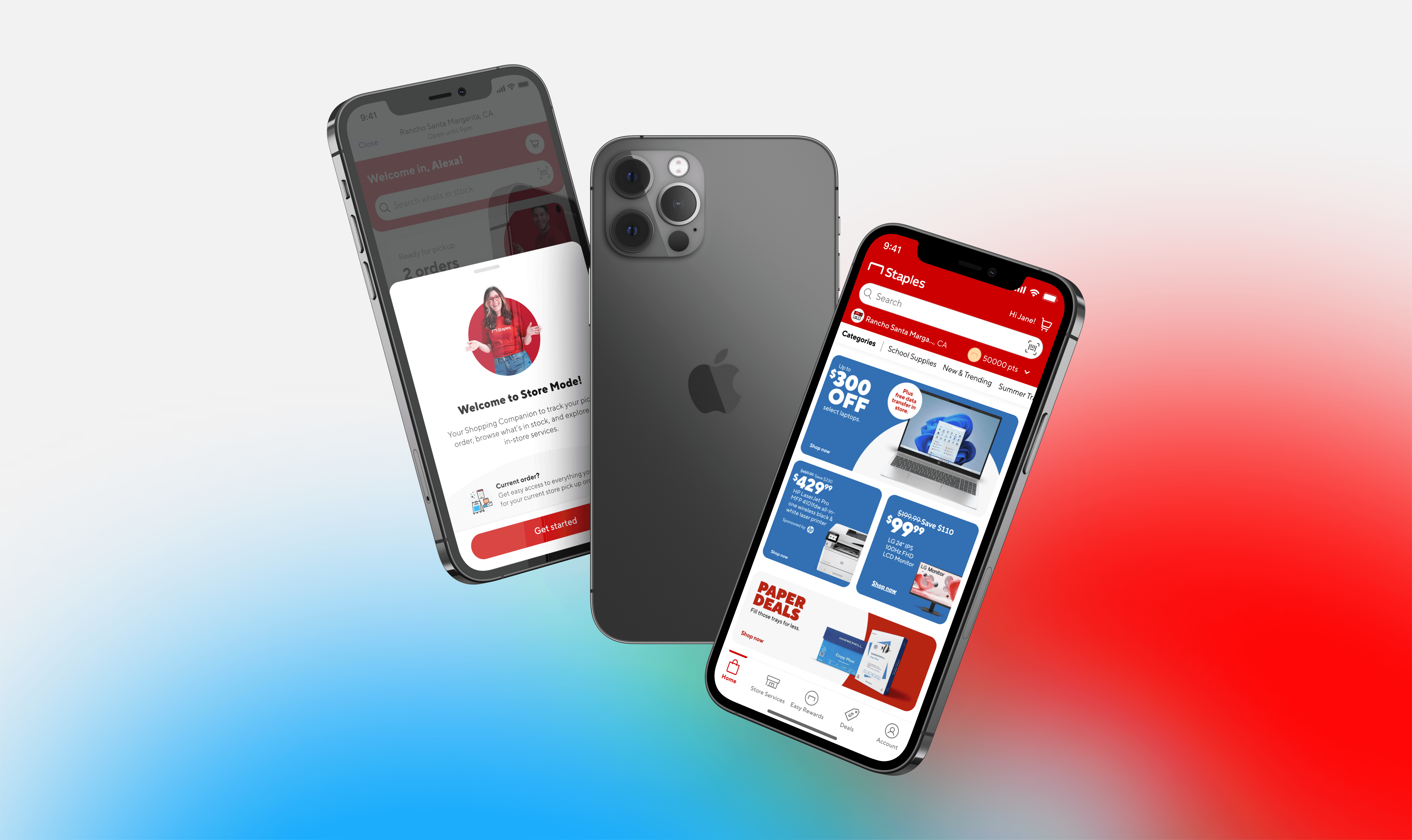
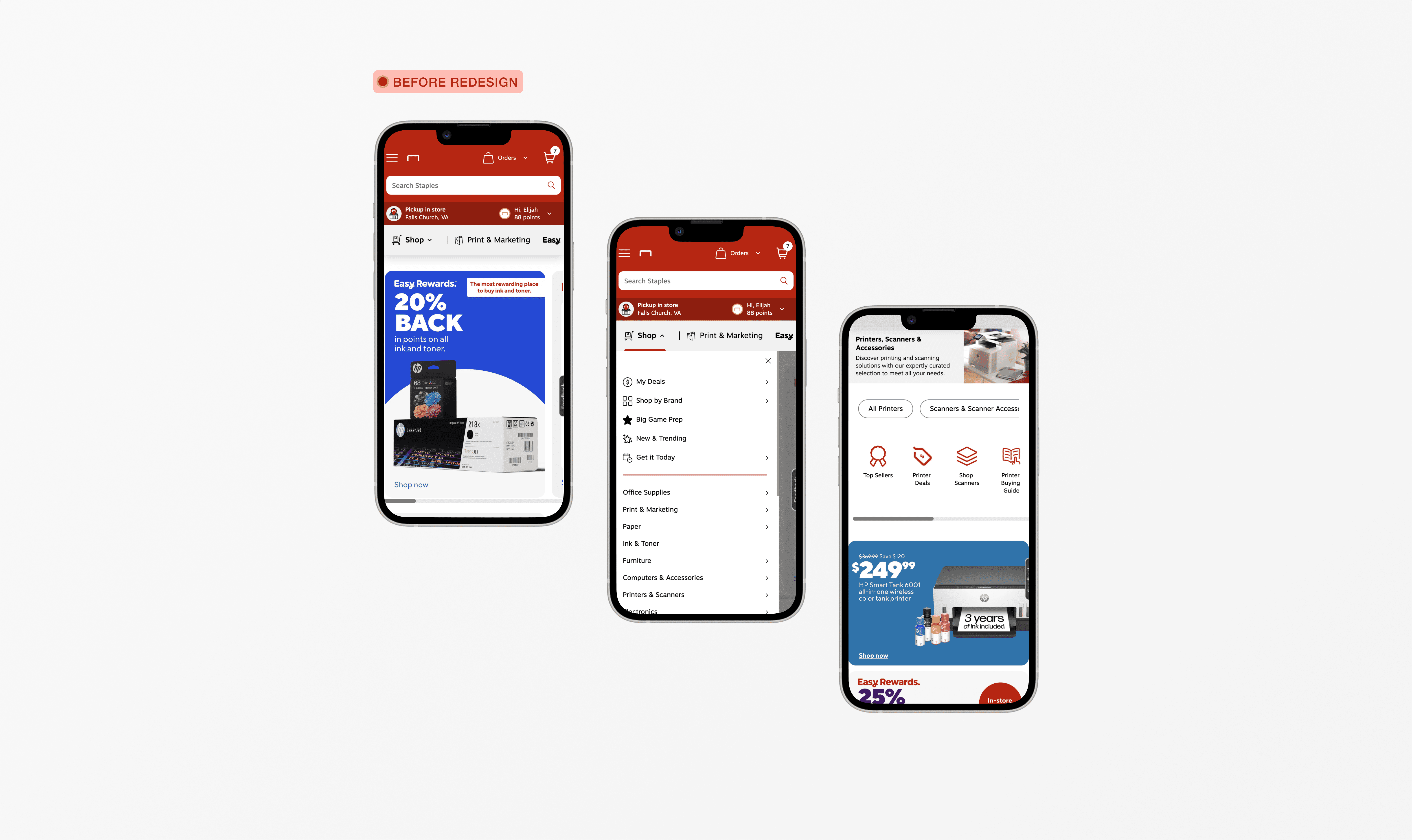
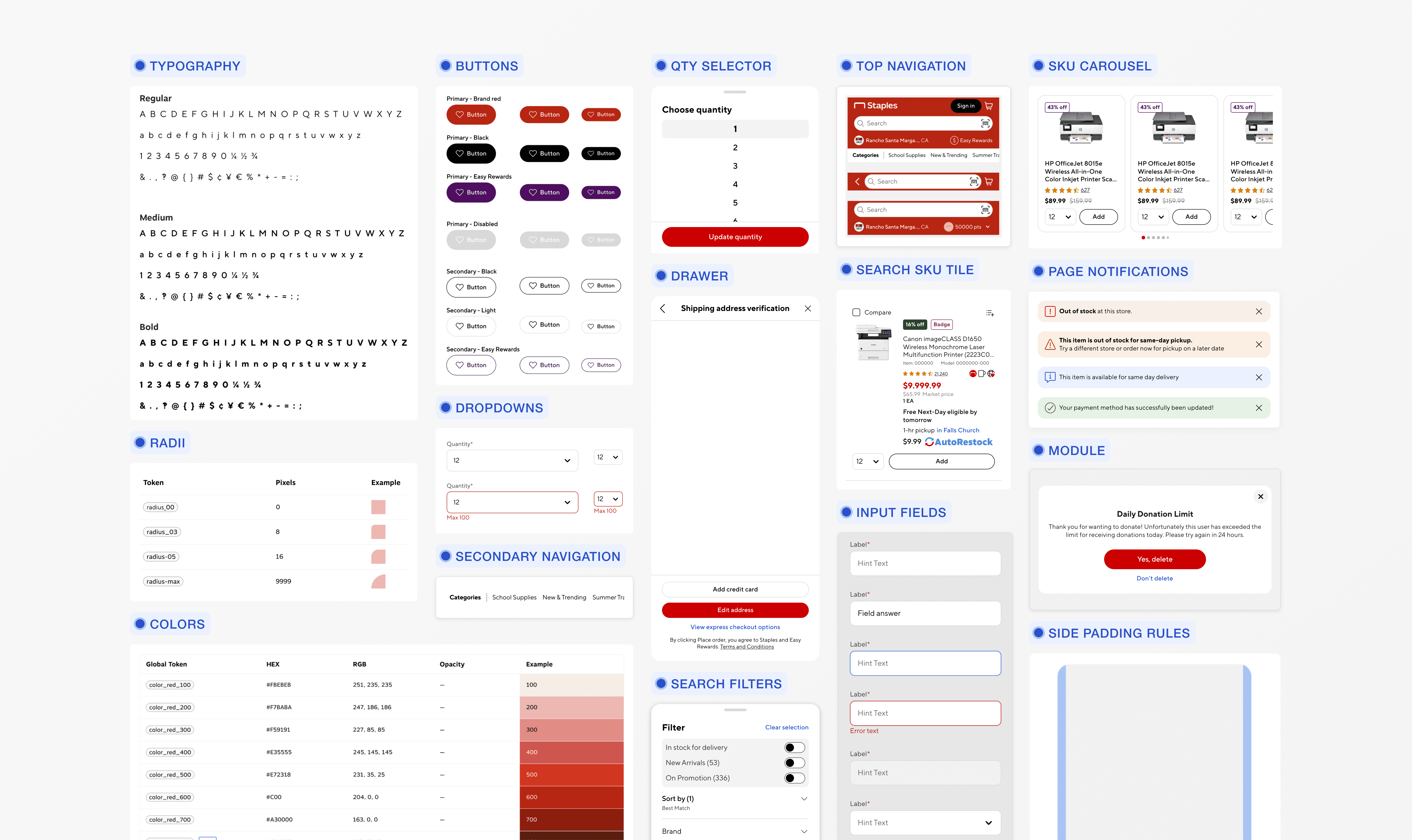
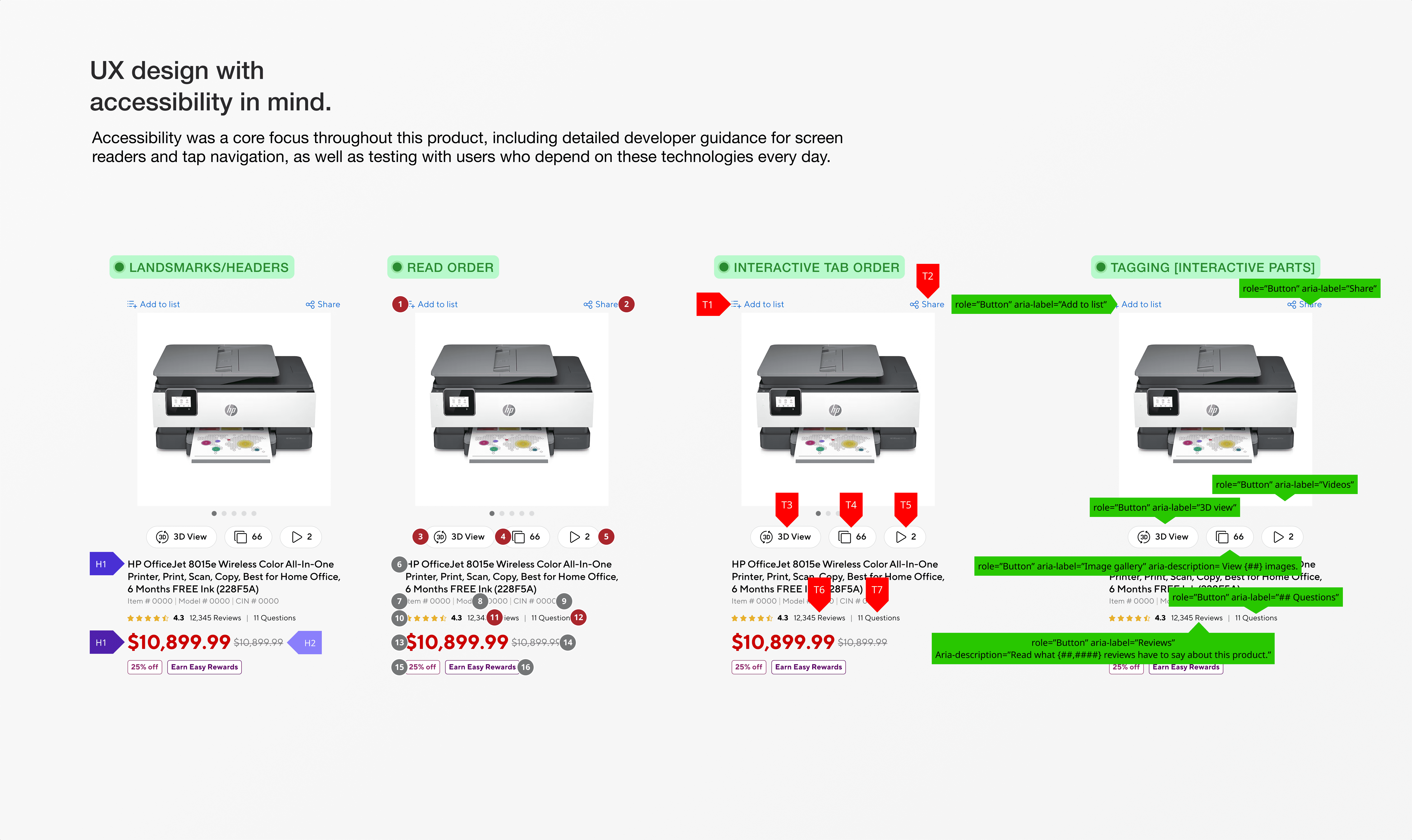
As the Staples mobile product expanded across different areas, the experience started to feel more disconnected, with inconsistent use of components and patterns making key customer journeys feel uneven. From an organizational standpoint, the lack of a shared design system created inefficiencies. Design and development handoffs took longer, teams often ended up solving the same problems more than once, and without clear standards, collaboration across design, product, and engineering required more effort than necessary. For customers, these inconsistencies—along with accessibility gaps and differences between web and mobile—made the overall experience feel less cohesive and introduced friction in important moments. Established a single source of truth through a unified design system for the new Staples mobile app, integrating accessibility guidance and Baymard Institute best practices to create more structured pages and more intuitive, tailored customer journeys.

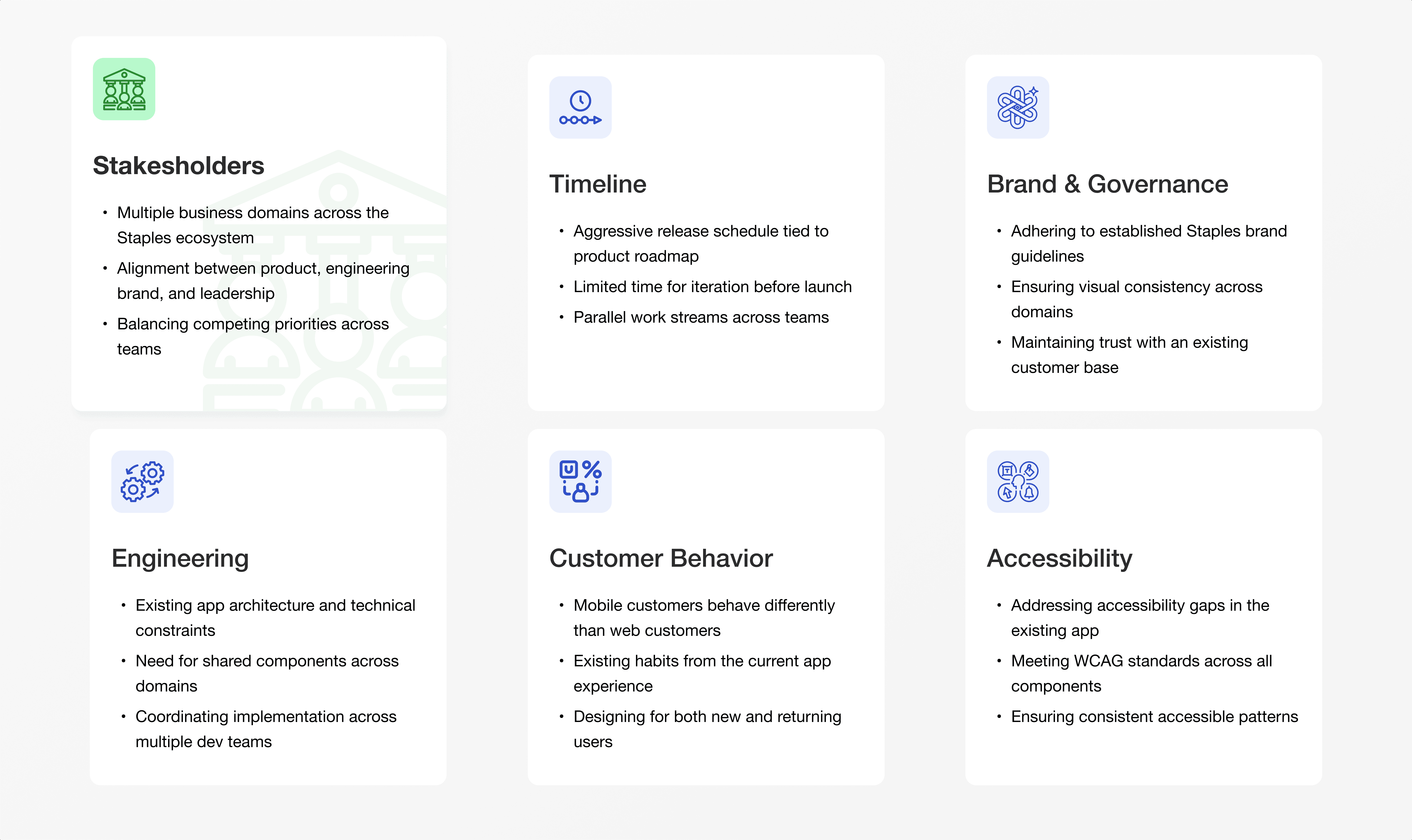
Redesigning the Staples mobile app required navigating significant cross-functional complexity. Because the app supports the full range of Staples services, the work involved multiple stakeholders across product, brand, and engineering, all while operating under an aggressive release timeline.Brand governance required modernizing the experience without straying from established standards. At the same time, it was critical to distinguish how mobile customer behavior differed from web usage to ensure the redesign reflected mobile-specific needs rather than simply mirroring the desktop experience.
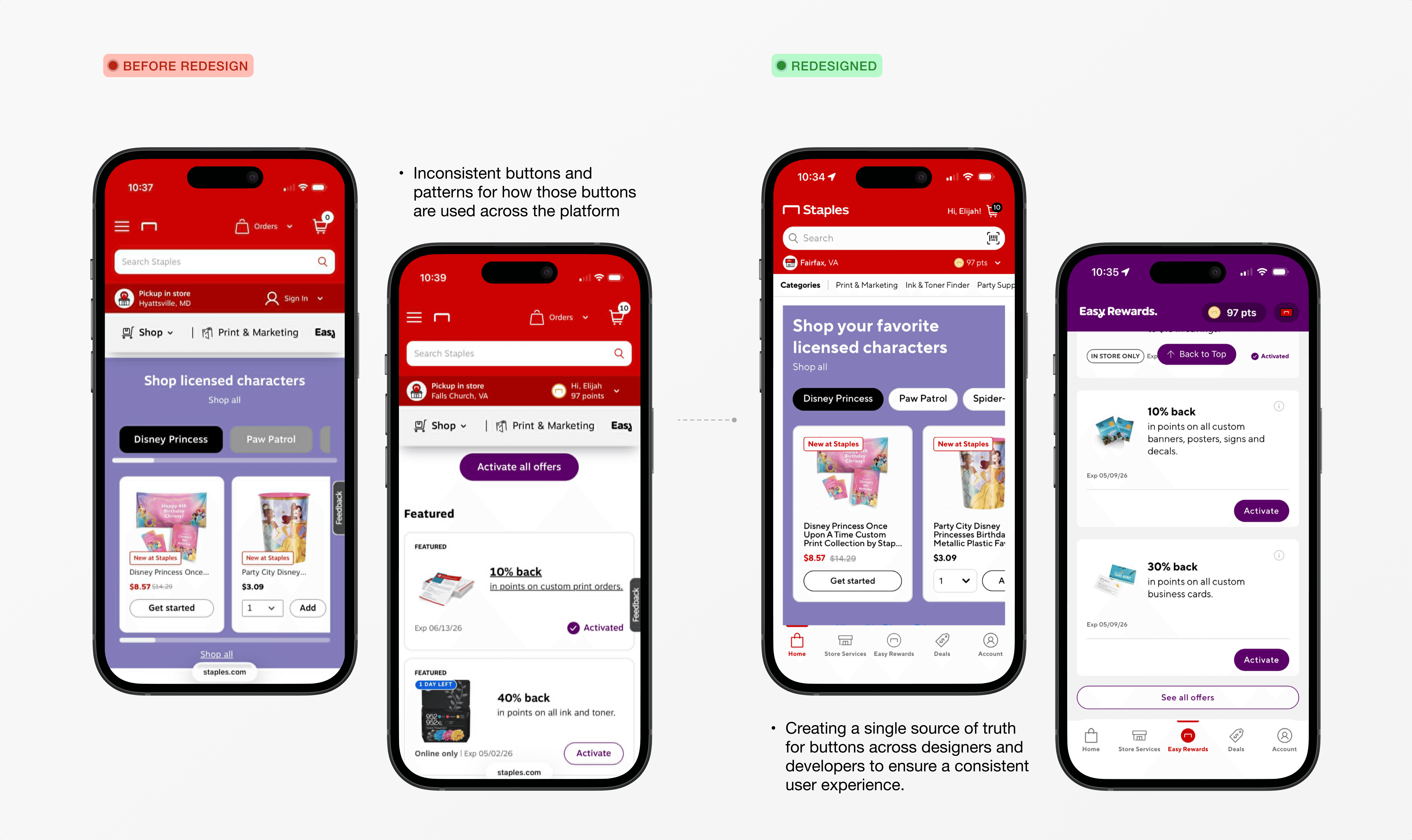
I partnered with engineering to standardize and simplify the system, creating reusable patterns like buttons, forms, cards, and modals that improved consistency and reduced duplication. We also aligned on a clear design-to-engineering workflow and addressed key accessibility gaps with documented guidelines. Key outcomes: - Standardized component library with clear usage - Faster handoff with fewer implementation issues - More consistent, accessible mobile experience - Scalable foundation for future growth
Designing with intention: creating guidelines for consistency and differentiation In reviewing the existing experience, I noticed inconsistencies in commonly used components like buttons, which led to a disjointed interface. By formalizing use case guidelines and standardizing visual treatments, I helped bring cohesion to the product — resulting in a more intuitive experience and a stronger, more recognizable brand.
As the Senior Lead UX Designer on the project, I helped guide the overall design direction for the Staples mobile app redesign. Because the app supports many areas of the business, the work required close collaboration with product managers, engineers, and brand stakeholders to align priorities, review design decisions, and balance customer needs with business and technical goals.
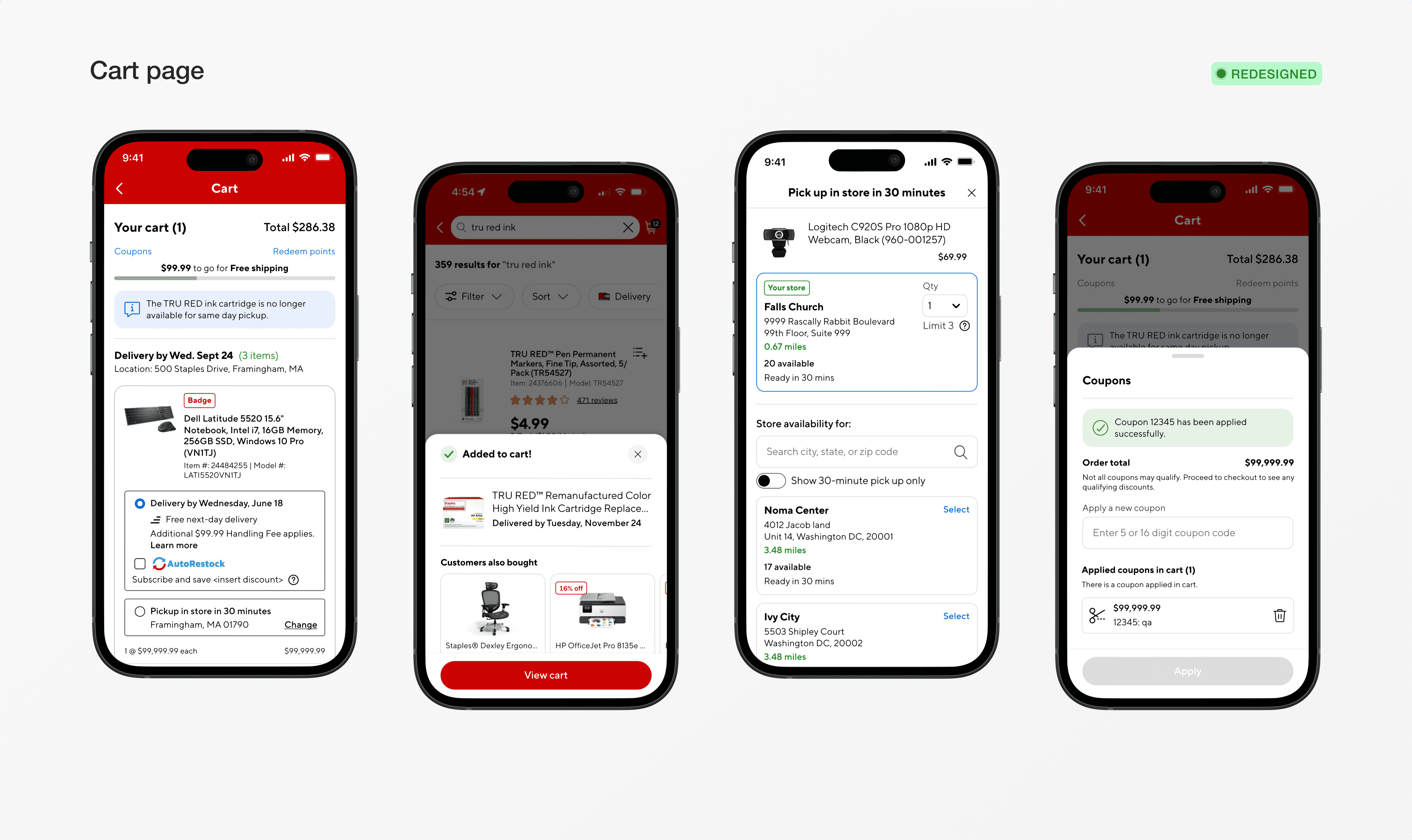
One example of this influence was a decision around the mini cart experience. In the existing mobile experience, tapping the cart icon opened a drawer that allowed users to bypass the cart page and go directly to checkout. After testing with users, we found that the mini cart pattern — originally carried over from the mobile web experience — created confusion within the app and often made users think they were already entering the checkout experience. This led to abandonment before users even reached the cart page. After reviewing research from the Baymard Institute and conducting a competitive analysis, I presented the findings to the team and recommended removing the mini cart behavior in favor of a more standard mobile app flow. The example below highlights the simplified user flow and where abandonment could occur within the original experience.

Another example of influence was introducing the updated design system across the mobile app. Because the redesign touched many areas of the product, it was important that teams understood how the new components and patterns should be used. I worked closely with product and engineering to review the system, walk teams through updated patterns, and help integrate the new components into ongoing work, creating a more consistent and scalable foundation for the future of the app.
A key outcome of this work was the alignment it created across teams. By partnering closely with designers, product managers, and developers across multiple Staples domains, we established shared patterns, components, and guidelines that brought greater consistency to the customer experience and improved collaboration throughout the design and development process. The redesign also simplified key customer journeys, addressed accessibility gaps, and aligned the app with common mobile interaction patterns. Beyond the customer-facing improvements, the new design system provides a scalable foundation that enables teams to build and launch future features more efficiently while maintaining a cohesive experience across the product.
The goal of the Staples mobile redesign was to modernize the customer experience while creating a stronger understanding of how customers shop and engage on mobile devices. With 60% of Staples traffic coming from mobile web and app experiences, improving the mobile experience represented a significant opportunity to better serve customers and support business growth. Working closely with product managers, engineers, researchers, and designers across multiple Staples domains, we reimagined the mobile experience from the ground up—establishing a more intuitive, accessible, and scalable foundation for the future. Following launch, the redesigned experience contributed to a 5% increase in app conversion and stronger customer engagement, with average session length increasing to 18 minutes. We also reduced error taps and dead taps across key customer journeys, creating a smoother, more intuitive experience that helped customers complete tasks with greater confidence and less friction. Beyond the metrics, the project established a shared design foundation that improved consistency across the app and enabled teams to build and scale future experiences more effectively.
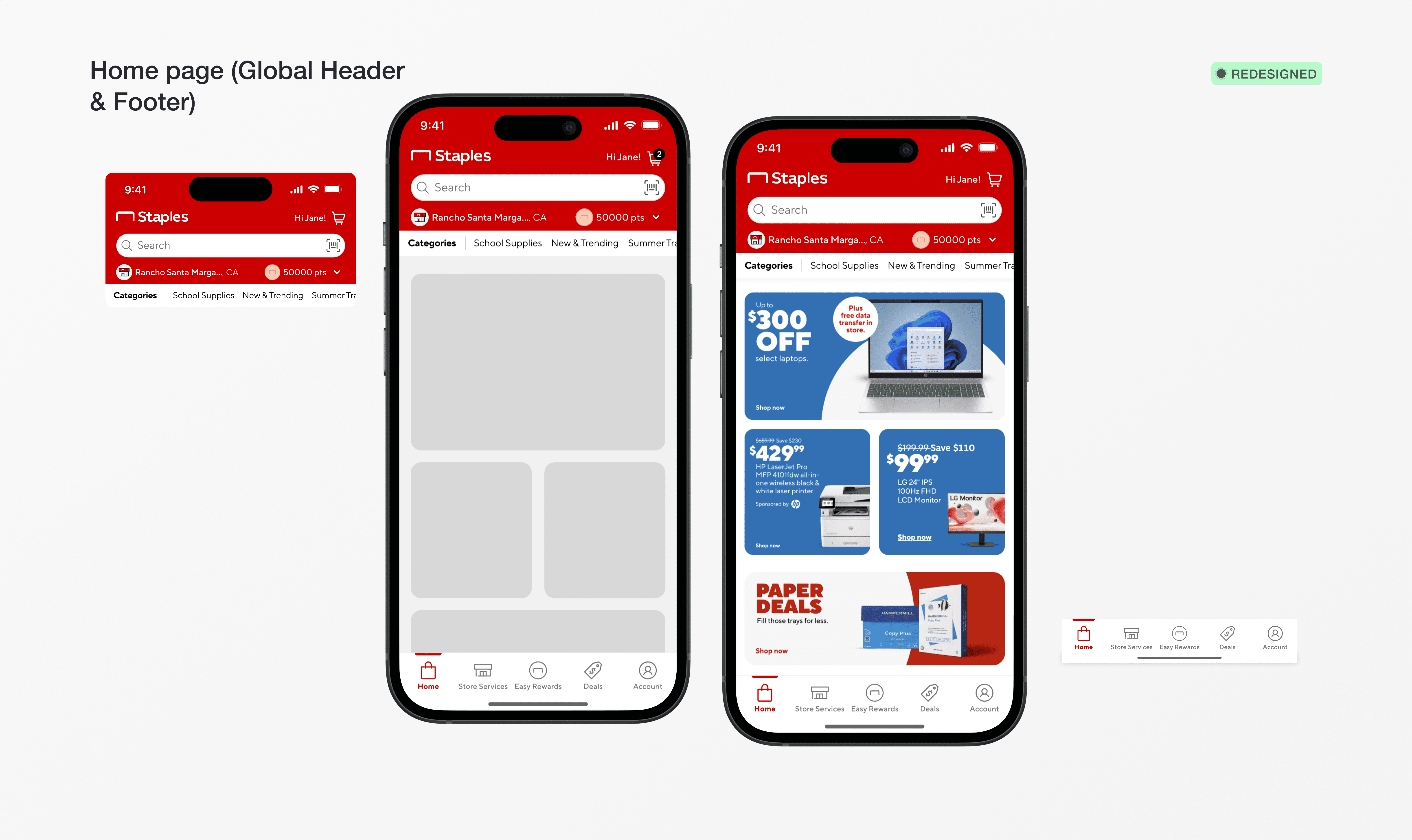
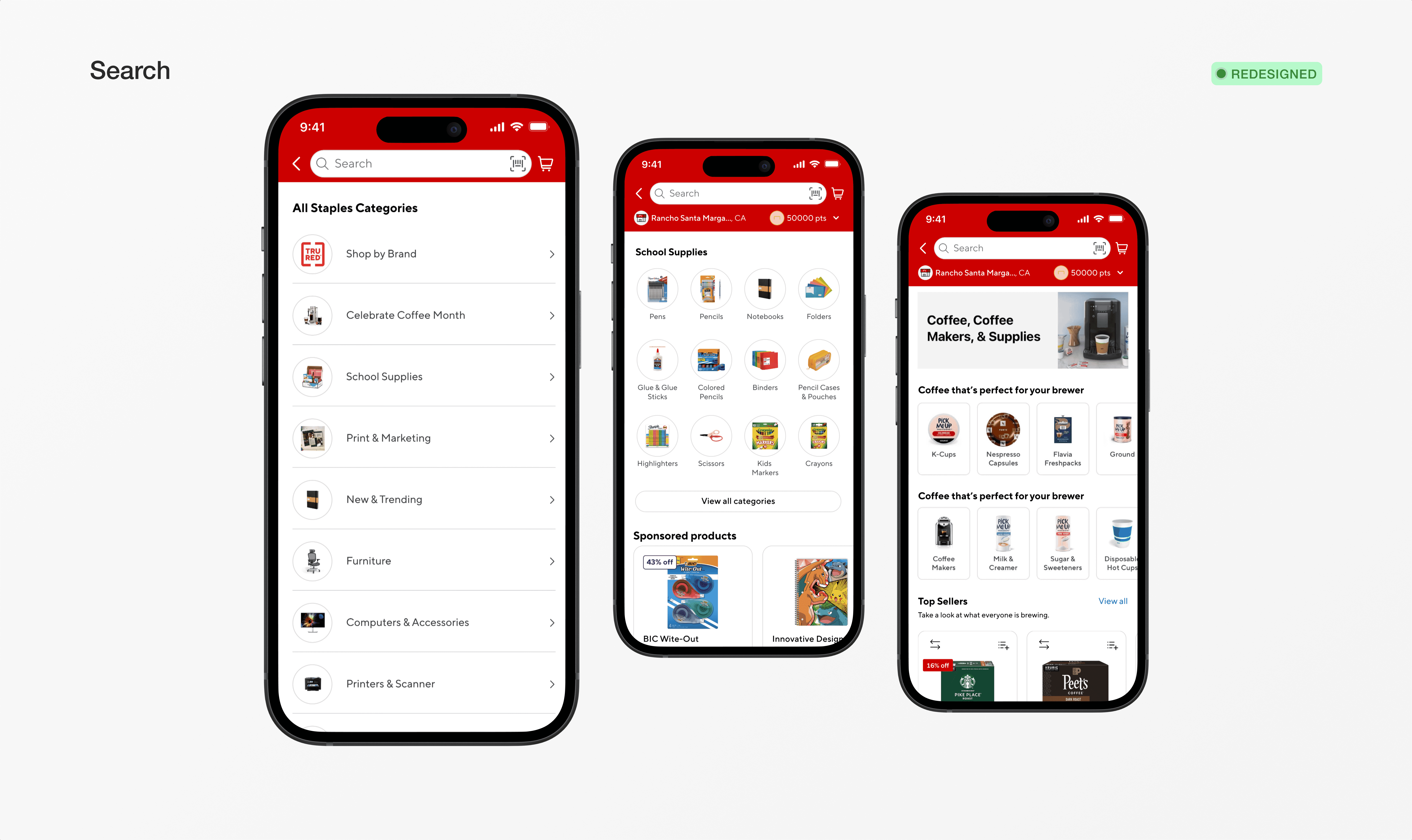
This project reinforced the importance of solving the right problem before designing a solution. While the redesign began as an effort to modernize the Staples mobile experience, it ultimately became an opportunity to better understand our customers, align teams around a shared vision, and establish a foundation that could scale with the business. Some of the most impactful decisions came not from redesigning screens, but from challenging assumptions, simplifying experiences, and advocating for customer needs throughout the process.
As the project evolved, I learned the value of influence and collaboration in driving meaningful change. Success required close partnership with product managers, engineers, researchers, and designers across multiple domains, each bringing different perspectives and constraints. By fostering alignment, maintaining open communication, and focusing on the underlying problems rather than predetermined solutions, we were able to deliver an experience that improved outcomes for both customers and the business. The project strengthened my belief that great design is not just about creating polished interfaces—it's about bringing people together to solve complex problems in a way that creates lasting value.